

Xi’an on a Budget: How a Simple SIM Card Made My Trip a Breeze
Landing in Xi’an for the first time, I was excited but a little nervous—mostly about staying connected. Back home, I’d heard horror stories about China’s internet restrictions: no Google, no WhatsApp, no Instagram. As a traveler who relies on maps, translation apps, and checking in with family, I knew getting a local SIM card wasn’t just a “good idea”—it was essential. What I didn’t expect was how easy and affordable it would be, or how much it would simplify my entire trip. If you’re heading to Xi’an (or anywhere in China), let me break down exactly how a simple SIM card turned my stress into smooth sailing.
Xi’an on a Budget: How a Simple SIM Card Made My Trip a Breeze
Why a China SIM Card Non-Negotiable for Xi’an
Before I left, I scrolled through forums and panicked: “Do I need a VPN? Can I use my home country’s data? Will I get lost without Google Maps?” The short answer? A local SIM is the only hassle-free way to navigate China. Here’s why:
- No Google, No Problem—but There’s a Local Fix: Google Maps doesn’t work in China, but Chinese apps like Gaode Maps (高德地图) are way better for local travel. They show real-time bus/metro schedules, predict crowd levels at attractions (like the Terracotta Army), and even have English voice navigation. But to use them, you need data.
- Cashless China Runs on Apps: In Xi’an, nearly every shop, restaurant, and even street food stall takes mobile payments—Alipay (支付宝) or WeChat Pay (微信支付). You can’t just swipe a credit card everywhere. Linking these apps to your bank account requires internet, and topping up your “electronic wallet” needs data too.
- Staying Connected Without Roaming Fees: My home carrier wanted $20/day for international roaming—for 1GB of data. A local SIM cost me $5 for 30GB. No contest. Plus, calling my hotel or a taxi driver with a local number is way easier than messing with country codes.
How to Get a SIM Card in Xi’an: Step-by-Step
I arrived at Xi’an Xianyang International Airport (XIY) and was relieved to see SIM card counters everywhere. Here’s exactly what I did—and what you should do too:
Choose Your Carrier: China Mobile, China Unicom, or China Telecom?
All three are reliable, but for travelers, China Mobile (中国移动) is the top pick. It has the widest 4G/5G coverage, even in rural areas outside Xi’an (like the Terracotta Army site). China Unicom is great for cheaper data, and China Telecom has good urban coverage, but I stuck with Mobile for peace of mind.
Pick a Plan: Focus on Data (You Don’t Need Much Else)
At the airport, China Mobile had a “Tourist SIM” package that was perfect:
- Price: ¥30 (about $4 USD)
- Data: 30GB of high-speed 4G data (valid for 30 days)
- Extras: 100 minutes of domestic calls, 100 SMS messages (I didn’t use these, but nice to have).
I also saw a ¥50 plan with 50GB of data for 60 days, which is great if you’re staying longer. Avoid plans with “unlimited data”—they’re often capped at 1-2GB and then slow to a crawl. For Xi’an, 30GB was more than enough: I used maps, streamed music on breaks, and posted photos daily, and still had 10GB left at the end.
What to Bring (It’s Super Simple)
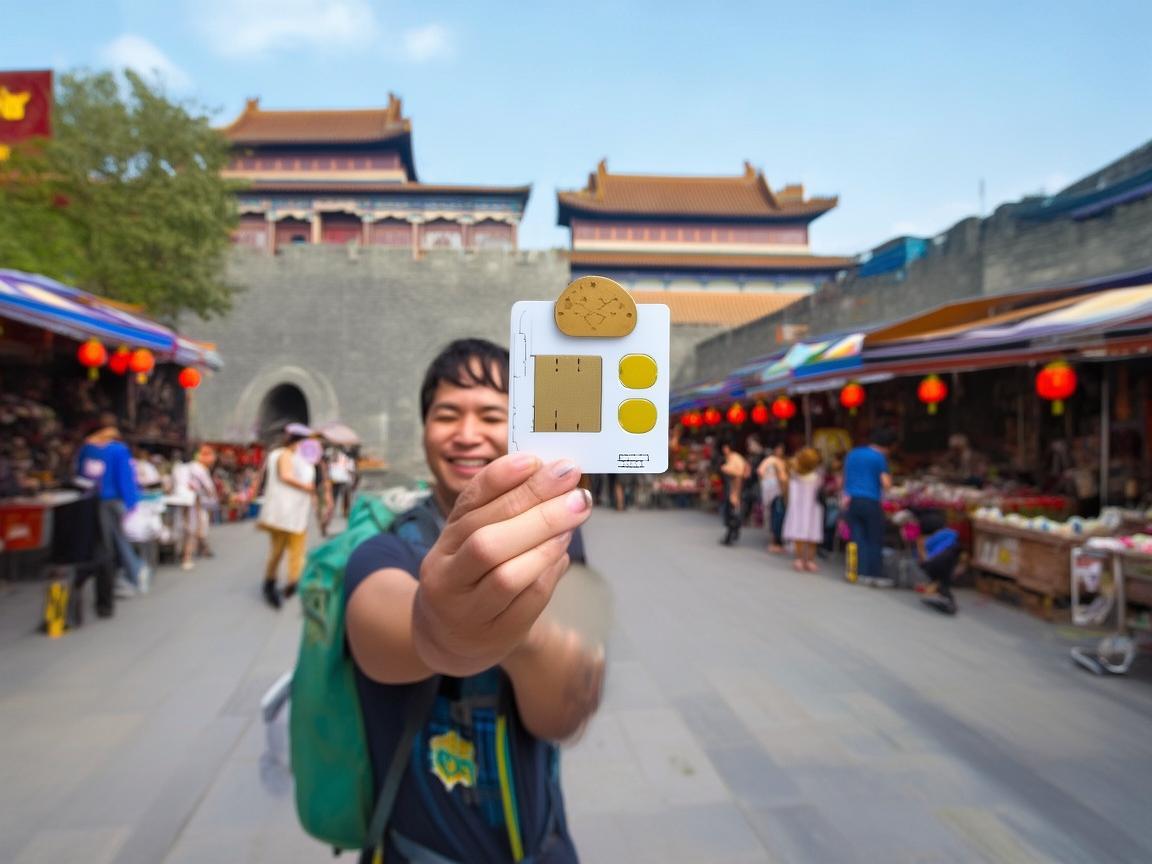
All I needed was my passport. No registration forms, no address in China—just scan my passport, pay, and done. The staff spoke basic English, but I’d downloaded a translation app just in case (more on that later!).
Activate It Immediately
The SIM comes in a package with a tiny pin to eject your old SIM (if your phone has dual SIM, keep your home SIM for international calls and use the Chinese one for data). Once it’s in, turn your phone off and on—you’ll get a text from China Mobile confirming activation.
How My SIM Card Saved My Xi’an Trip (Real-Life Examples)
Having that SIM wasn’t just convenient—it was a game-changer. Here’s how it played out every day:
Day 1: Navigating the Muslim Quarter Like a Local
I stayed near the Bell Tower, in the heart of the Muslim Quarter (回民街). Without Google Maps, I’d have been lost immediately, but with Gaode Maps, I typed in “Muslim Street Snack Street” (回民街小吃街), and it guided me turn-by-turn—even through the narrow alleyways. When I wanted to try roujiamo (Chinese hamburger), I opened Dianping (China’s Yelp) to find the highest-rated stall near me. The SIM let me check reviews, compare prices, and even see wait times. No wandering aimlessly!
Day 2: Terracotta Army—No More “Where’s the Bus Stop?”
The Terracotta Army is 40km outside Xi’an. I knew taking a bus was cheaper than a taxi, but I was worried about missing the stop. With Gaode Maps, I tracked the bus in real-time: it showed me which bus stop to go to (Bus 5 “兵马俑博物馆”), how long until the next bus, and even alerted me when to get off (“100m to Terracotta Army Museum”). When I left, I used the app to hail a Didi (China’s Uber) back to the city—no language barrier, since the driver’s location popped up instantly.
Day 3: Eating Like a Local (and Paying Like One)
Xi’an’s food is incredible, but most street vendors don’t take cash or cards. On my first day, I tried to pay for a yangrou paomo (mutton soup) with cash, and the vendor just pointed to her WeChat Pay QR code. Thankfully, my SIM was active—I opened WeChat, scanned the code, and paid in 2 seconds. Later, when I wanted to order late-night snacks to my hotel, I used Meituan (China’s Uber Eats) to browse menus and pay—all thanks to data.
Day 4: Emergency (and How My SIM Fixed It)
I got a little lost in the Giant Wild Goose Pagoda (大雁塔) complex and couldn’t find my way back to the metro entrance. Panicked, I opened WeChat and called my hotel (I’d saved their number when I booked). The receptionist spoke English and guided me back using Gaode Maps. Without a local SIM, I would’ve been stuck—no WhatsApp, no Google Translate, no way to ask for help.
Bonus Tips: Making the Most of Your SIM
- Download Apps Before You Arrive: China’s app stores (like Apple’s Chinese App Store) are blocked without a VPN. So, download Gaode Maps, Didi, Alipay, WeChat, and Meituan at home.
- Get a VPN If You Need It: I used a VPN to access Google/Gmail occasionally, but it’s not essential. Most travelers survive without it—Gaode Maps is better for navigation anyway.
- Recharge Easily: If you run out of data, just open the China Mobile app (it’s pre-installed) or go to any 7-Eleven/Convenience Store—they sell top-up cards with cash.
- Dual SIM Phones Are Your Best Friend: If your phone supports dual SIM, keep your home SIM for international calls and the Chinese one for data. No switching back and forth!
Final Thoughts: A Small SIM, Big Impact
By the end of my trip, I realized that getting a China SIM card was the best decision I made. It cost less than a meal, took 5 minutes to set up, and turned a potentially stressful trip into a seamless adventure. I didn’t just see Xi’an—I lived it: I ate where the locals eat, navigated like a pro, and never once felt disconnected.
So, if you’re heading to Xi’an (or anywhere in China), don’t overthink it. Grab a China Mobile SIM at the airport, pop it in, and get ready to explore. Trust me—this “simple system” will make your trip 100x easier. Now go enjoy those biangbiang noodles—and don’t forget to post about them (your SIM card will make sure it happens!).
Xi’an Airport Transfer Service
Private English-speaking driver service in Xi’an operated directly by Bruce Zhang. 24/7 airport pickup and hotel transfer for foreign travelers.
Helpful for Your Trip in Xi’an
Your Ultimate China SIM App Guide: Navigating Xi’an Like a Local
2026-07-27China SIM: My Lifeline for Seamless Travel in Xi’an
2026-07-27Xi’an Travel Guide: Staying Connected with China SIM for a Hassle-Free Trip
2026-07-27Navigating Xi’an: A Traveler’s SIM Card Troubleshooting Guide
2026-07-27Xi’an Travel Tips: Staying Connected with China SIM & Offline Maps
2026-07-27Why a China 5G SIM Made My Xi’an Trip Effortless (and How to Get One)
2026-07-27Your Essential Guide to Getting a SIM Card in Xi’an: A Traveler’s Handbook
2026-07-27Xi’an Hotspot Access: A Traveler’s No-Nonsense Guide to China’s Ancient Capital
2026-07-27Xi’an Travel Tips: My Hassle-Free China SIM Activation Experience
2026-07-26Your Xi’an SIM Card Survival Guide: Skip the Roaming Rip-offs with China SIM Kiosks
2026-07-26