

Xi’an Travel Tips: Getting a China SIM Card at the Airport Made Easy
Landing in Xi’an felt like stepping into a dream—one where ancient city walls rise modern skyscrapers, and steaming bowls of yangrou Paomo (mutton soup) smell better than any airport coffee. But as I turned on my phone, the dream hit a snag: “No Service.” Cue mild panic. I’d forgotten to grab an international plan, and relying on airport Wi-Fi for a 5-day trip? Not ideal. Thankfully, a quick chat with a local at baggage check pointed me to the solution: a China SIM card, right there at the airport. If you’re heading to Xi’an, let me save you the guesswork—here’s exactly how to get connected hassle-free, from terminal to terracotta warriors.
Why Get a SIM Card at Xi’an Airport?
First, why bother? China’s internet is tightly regulated, so foreign SIM cards (like from AT&T or Vodafone) rarely work here. Free Wi-Fi? It’s available in airports, hotels, and some cafes, but it’s slow, requires constant re-login, and often blocks apps like Google Maps, Instagram, or Google Translate (yes, even for maps!). A local SIM card, on the other hand, gives you:
Xi’an Travel Tips: Getting a China SIM Card at the Airport Made Easy
- Reliable 4G/5G across the city (Xi’an’s coverage is solid, even at the Terracotta Army).
- Access to essential apps: WeChat (for messaging, payments, and hailing taxis), Alipay (for buying snacks, subway tickets, or entrance fees), and Didi (China’s Uber, way cheaper than taxis).
- No roaming fees (which can cost $10+ per GB!).
And the best part? You can get it before you leave the airport. No wandering around, no language barriers (mostly), and no waiting until the next day.
Where to Find SIM Card Counters at Xi’an Xianyang International Airport (XIY)
Xi’an has two terminals: T2 (mostly international flights) and T3 (most domestic flights). I flew into T3, and here’s what I found:
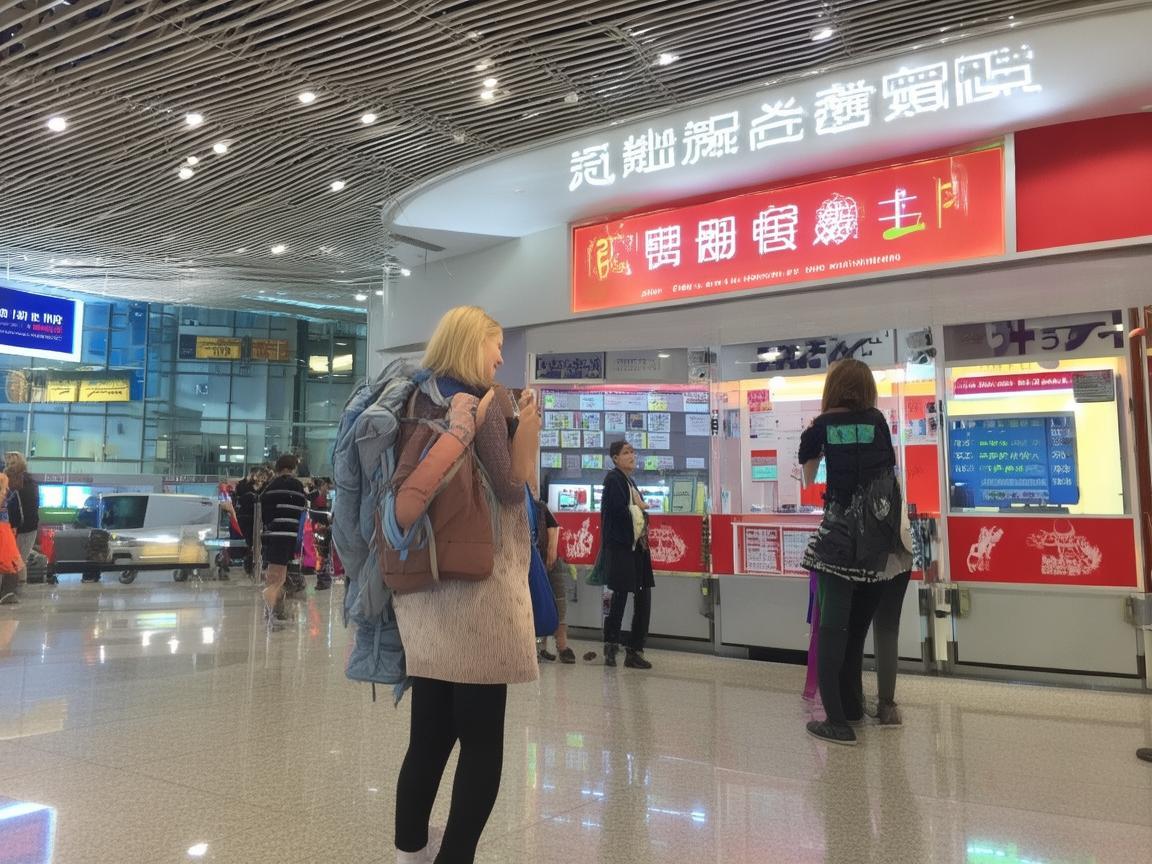
- Terminal 3: After baggage claim, follow the signs for “Telecom Services” or “SIM Cards.” You’ll pass a few currency exchange booths, and then—bam!—a row of counters for China’s three major carriers: China Mobile, China Unicom, and China Telecom. They’re hard to miss; each has a big logo and staff in blue/white/red uniforms.
- Terminal 2: Smaller, but still has counters for the same carriers, near the exit.
Pro tip: Skip the “tourist helpers” outside the terminal offering SIM cards—they’re often overpriced. Stick to the official airport counters.
Which Carrier to Choose? Mobile, Unicom, or Telecom?
All three work in Xi’an, but they have slight differences. Here’s a quick breakdown:
| Carrier | Best For | Coverage | English Support |
|---|---|---|---|
| China Mobile | Travelers going rural (e.g., day trips to Huashan Mountain) | Widest coverage in China, especially remote areas | Good (most counters have English-speaking staff) |
| China Unicom | Budget-focused travelers (cheapest data deals) | Solid in cities, weaker in mountains | Moderate (some staff speak basic English) |
| China Telecom | Streamers/video callers (most stable 5G) | Great in urban areas, decent in suburbs | Excellent (many counters have English menus) |
I chose China Telecom because I read their 5G was fastest in the city center, and I wanted to video-call my family. Plus, their counter had an English menu—total lifesaver for someone whose Chinese is limited to “ni hao” and “duo shao qian?” (hello, how much?).
What You’ll Need to Buy a SIM Card
Don’t overpack—you only need two things:
- Your passport (they’ll scan it for registration; Chinese law requires all SIMs to be linked to a real name).
- Cash or mobile payment (Alipay/WeChat pay). Most counters take both, but having a little cash (RMB) handy is smart.
No photos, no extra paperwork—just your passport. Easy peasy.
Step-by-Step: Buying Your SIM Card
Okay, let’s walk through it. I’ll use my China Telecom experience as an example, but the process is similar for all carriers.
Pick a Counter
I walked up to the China Telecom counter. The staff smiled and said “Hello!” in English—impressive. I showed my passport, and she handed me a small menu with English options.
Choose a Plan
This is where it gets good. Tourist plans are way cheaper than local plans, and they’re designed for short stays. Here are the most popular options (prices are in RMB; divide by 7 to get USD roughly):
| Plan Type | Price | Data | Calls | Validity | Best For |
|---|---|---|---|---|---|
| “Tourist Daily” | RMB 15/day | 1GB high-speed data/day | Unlimited domestic calls | 7 days | Short stays; heavy data users (maps, videos) |
| “Tourist Weekly” | RMB 30 | 10GB total data | 100 minutes | 7 days | Moderate data; need some calls |
| “Tourist Monthly” | RMB 80 | 20GB total data | 300 minutes | 30 days | Long stays; light data use |
I went for the Tourist Daily plan: RMB 15/day × 5 days = RMB 75 total. For 1GB/day (enough for Google Maps, WeChat, and Instagram), it was worth it. The staff said if I used more than 1GB, speed would drop to 128kbps—still fine for messaging, just not videos.
Pay and Activate
I paid with WeChat Pay (you can link your foreign credit card to WeChat or Alipay before traveling—highly recommend). The staff printed a small receipt, handed me the SIM card (in a little case), and showed me how to insert it into my phone.
Important: Turn off your phone before switching SIMs! Then, restart it. The staff sent a text with the activation code—just enter it when prompted, and done. In 2 minutes, I had 4G.
Test It
Don’t walk away yet! Open WeChat or send a text to make sure it’s working. I immediately texted my friend back home: “Connected! Xi’an here!” Success.
Extra Tips for Your SIM Card
- Top-up on the go: If you run out of data, open the China Telecom app (in English) or visit any 7-Eleven—they top up SIM cards too.
- Wi-Fi backup: Some cafes/hotels have “ChinaNet” Wi-Fi—connect via WeChat (it’ll auto-redirect you to register with your phone number).
- Keep your number: If you visit China again, you can reactivate the same SIM within 6 months (no need to buy a new one).
Why This Made My Xi’an Trip 100x Better
Let me tell you—having that SIM card changed everything. I used Didi to get from the airport to my hotel in 30 minutes (cost: RMB 45, vs. RMB 120 for a taxi). I pulled up Google Maps to find the Muslim Quarter at night, ordered lamb skewers via WeChat (no cash needed!), and even used Alipay to buy a subway ticket (way faster than waiting in line).
When I visited the Terracotta Army, I didn’t have to worry about getting lost—I just opened Baidu Maps (which works better in China than Google Maps) and followed the walking directions. And when I got lost in the Muslim Quarter (totally worth it, by the way), I called my hotel using the SIM’s call time—no more hand gestures and broken Mandarin.
Best part? No stress. I didn’t have to hunt for Wi-Fi or worry about being offline. A SIM card at the airport is the first step to feeling like a local, not a tourist.
Final Thoughts
Xi’an is a city of contrasts—ancient and modern, chaotic and calm. Don’t let a dead phone ruin the magic. Getting a China SIM card at the airport is quick, cheap, and practical. It’s the first thing I’ll do on my next trip to China—and it should be yours too.
Now go enjoy those terracotta warriors, and don’t forget to post a pic on Instagram (you’ll have the data to do it!). Happy travels! ???
Xi’an Airport Transfer Service
Private English-speaking driver service in Xi’an operated directly by Bruce Zhang. 24/7 airport pickup and hotel transfer for foreign travelers.
Helpful for Your Trip in Xi’an
Surviving and Thriving in Xi’an: A Traveler’s Guide to China’s Internet Carrier
2026-09-10China SIM Verification: A Traveler’s Step-by-Step Guide (From a Xi’an Visitor’s Perspective)
2026-09-08Xi’an Travel Tips: Why China Roaming Data is Non-Negotiable for Foreign Visitors
2026-09-05Traveling Xi’an: A Tourist’s Guide to Navigating China’s SIM Authentication System
2026-09-04Your Ultimate Guide to Network Settings & China SIM Cards for a Seamless Xi’an Trip
2026-08-31Xi’an: Where Ancient History Meets Modern Connectivity – A China Traveler’s Practical Guide
2026-08-30Your Go-To Guide for China SIM Service Centers in Xi’an: Stay Connected Hassle-Free
2026-08-26Surviving Xi’an Without the Slow Lane: A Tourist’s Guide to China SIM Throttling
2026-08-11Xi’an Travel Survival Guide: How a China SIM Card and Call Center Saved My Trip
2026-08-10My Xi’an Survival Guide: Why a China SIM Card is Your Travel Lifeline
2026-08-09