

Your Lifeline in Xi’an: Why a China SIM Card is a Travel Game-Changer
Landing in Xi’an for the first time, I was buzzing with excitement—the Terracotta Army, the Muslim Quarter’s street food, the ancient city walls at sunset. But within an hour of arriving, that excitement hit a wall: literally. My phone, back home in Canada, showed “No Service,” and I was standing in the middle of Xi’an North Railway Station, completely lost, with no way to call my hostel or pull up a map. Cue the panic.
The Problem with International Roaming (and Why Wi-Fi Isn’t Enough)
Before my trip, I’d assumed international roaming would be enough. Big mistake. I’d added a global roaming plan to my Canadian plan for $30 extra, thinking it’d cover basics. But here’s the thing: international roaming in China is slow (like, 2G slow), expensive (I paid $5 for 100MB of data—gone in 10 minutes of Google Maps), and unreliable. In the crowded Muslim Quarter, my signal kept dropping, and I couldn’t even send a WhatsApp message to my travel buddy to meet at a specific stall.
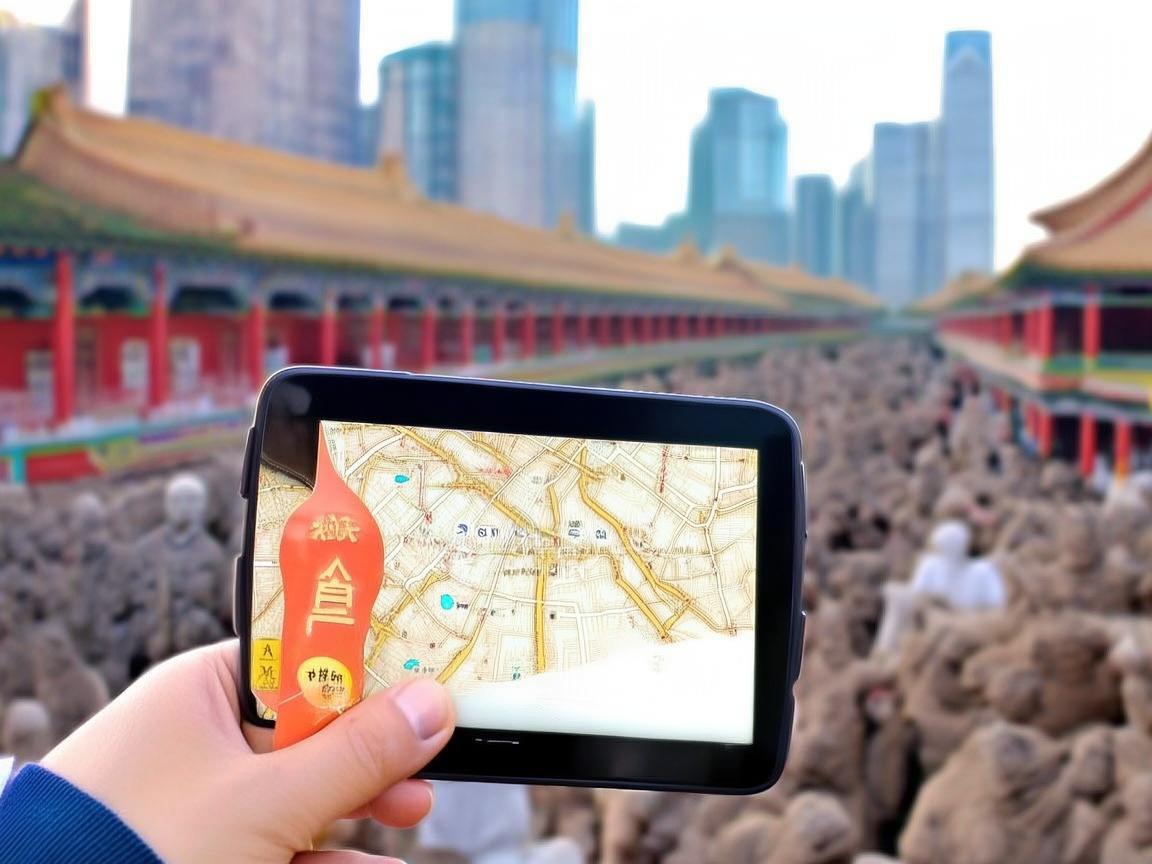
Your Lifeline in Xi’an: Why a China SIM Card is a Travel Game-Changer
Wi-Fi? Don’t get me started. Most cafes and hotels have it, but you need a Chinese phone number to log in (those “scan the QR code to connect” signs? They require a local number). Once, I sat in a Starbucks for 20 minutes trying to connect, only to realize the Wi-Fi portal required a code sent to a Chinese phone. I ended up using my phone’s hotspot—but with no data, that was useless.
Enter the China SIM Card: My Savior
By my second day, I’d had enough. I asked a local student at my hostel for help, and she dragged me to a China Mobile shop near the Bell Tower. Thirty minutes and ¥50 later, I walked out with a prepaid SIM card, and suddenly, the world opened up. No more “No Service” signs. No more panic attacks over maps. Just smooth, fast, affordable internet—exactly what a traveler needs.
Why a China SIM Card Non-Negotiable for Xi’an
Let’s break it down: China’s “international connectivity system” (basically, how local networks handle foreign visitors) is designed around local SIM cards. Here’s why it’s a game-changer:
Unbeatable Affordability
My China Mobile plan cost ¥50 (about $7) for 20GB of 4G data—valid for 30 days. That’s it. No hidden fees, no overage charges. For comparison, my Canadian roaming plan would’ve cost me $100+ for the same amount of data. In Xi’an, where you’ll be using Google Maps, WeChat, and translation apps all day, this is a lifesaver.
Reliable Coverage Everywhere
Xi’an’s 4G/5G coverage is incredible—even in remote spots like the Terracotta Army pits or the Big Wild Goose Pagoda, I had full signal. Local carriers (China Mobile, China Unicom, China Telecom) have networks that blanket the city, subways, and even nearby countryside. No more “dead zones” where you can’t call a taxi or check opening hours.
Access to “China-Only” Apps
This is the big one. In China, Google, WhatsApp, Facebook, and Instagram are blocked. But apps like WeChat (for messaging), Alipay (for payments), Didi (for ride-hailing), and Baidu Maps (for navigation) are essential. A local SIM card lets you download these apps and use them without a VPN (which, by the way, can be slow and unreliable in China). I used WeChat to message my hostel owner when I got lost, Alipay to buy a ¥5 bowl of yangrou Paomo (mutton soup) at a street stall, and Didi to get back to my hotel at 11 PM without haggling with taxi drivers.
No More “Log-In Nightmares”
Remember the Wi-Fi issue? With a local SIM, I just turned on my phone’s data, and everything worked. No more scanning QR codes, no more waiting for “verification codes” sent to foreign numbers. At the Terracotta Army, I pulled up English audio guides on Baidu Maps instantly; at the Muslim Quarter, I used a translation app to ask a vendor if his lamb skewers were spicy.
How to Get a China SIM Card: Step-by-Step
Don’t worry—it’s easy, even if you don’t speak Mandarin. Here’s what I did:
Where to Buy
- At the Airport/Train Station: Xi’an Xianyang International Airport and Xi’an North Railway Station have China Mobile/Unicom/Telcom counters. They speak basic English and are used to helping tourists. I got mine at the airport on my way out—saved me a trip into the city.
- In the City: Any major shopping area (like the Bell Tower or South Gate) has carrier stores. Staff often speak some English, and you can even get help setting up your phone.
- Online: If you’re worried about language barriers, you can buy a “tourist SIM” on sites like Amazon or AliExpress before you leave. They come with instructions and are activated when you insert them into your phone.
What You’ll Need
- Passport: This is mandatory. Chinese law requires real-name registration for all SIM cards. They’ll scan your passport and take a photo—no big deal.
- Unlocked Phone: Make sure your phone isn’t locked to your home carrier. Most modern phones are unlocked, but double-check before you leave.
- A Little Cash: SIM cards are cheap (¥30-¥100 for basic plans), but some shops only take cash.
Which Carrier to Choose
- China Mobile: Has the best coverage in rural areas, but can be crowded in cities. Great if you’re planning day trips outside Xi’an (like to Mount Hua).
- China Unicom: Slightly cheaper in cities, and good for 4G speed. Perfect if you’re sticking to Xi’an’s urban areas.
- China Telecom: Less common, but has good coverage in some neighborhoods.
I went with China Mobile because I knew I’d be using Google Maps a lot, and their 4G is rock-solid.
Choosing a Plan
For most travelers, a prepaid data plan is all you need. Here’s what to look for:
- Data Allowance: 10-20GB is plenty. I used 15GB in a week (maps, WeChat, photos, and occasional video calls).
- Validity: Most plans last 7-30 days. If you’re staying longer, you can renew online or at a carrier store.
- Extras: Some plans include free WeChat data or call minutes. I didn’t need calls—WeChat’s voice and video work fine with data.
My “Must-Have” SIM Card Uses in Xi’an
Once I had my SIM card, traveling became so much smoother. Here are a few ways it saved my trip:
Navigating the Terracotta Army Without a Guide
I’d heard the Terracotta Army was confusing to navigate (three pits, plus a museum), and hiring a guide was expensive. Instead, I used Baidu Maps (which has detailed English walking routes) and an audio app. When I got to Pit 1, I scanned a QR code for a free English guide—no waiting in line for a human guide. My SIM card let me do all this without Wi-Fi, and I even shared my location with my friend so we could meet up easily.
Eating Like a Local in the Muslim Quarter
The Muslim Quarter is a food lover’s paradise, but most vendors don’t speak English. With my SIM card, I used Google Translate to type “Is this spicy?” and show it to a vendor selling roujiamo (Chinese burgers). He laughed, shook his head, and handed me a mild one—delicious! I also used Alipay to pay for everything: no fumbling with cash, no worrying about exchange rates.
Getting Around the City Like a Pro
Xi’an’s subway is great, but the signs are in Chinese. With my SIM card, I used Didi (China’s Uber) to get everywhere—from my hostel to the city walls at 6 AM (to avoid crowds) to the train station for a day trip to Mount Hua. Didi is cheaper than taxis, and the app has an English option. I even used it to order food delivery one night when I was too tired to go out—just like at home!
Staying Connected with Family
Back home, my parents were worried I’d “disappear” because of the Great Firewall. With my SIM card, I used a VPN (which works better with local data) to text them on WhatsApp and send photos. I even did a video call from the top of the city walls—they could see the sunset over Xi’an, and it made them feel like they were there with me.
Final Tips: Don’t Leave Home Without It
By the end of my trip, my China SIM card was the most important thing in my bag—more than my passport, more than my camera. Here’s my last advice:
- Buy it ASAP: Get your SIM card at the airport or train station the moment you arrive. Don’t wait like I did—you’ll save yourself a lot of stress.
- Keep your number: Even after you leave, you can top up your plan online if you plan to come back to China.
- Download apps beforehand: Since Google Play is blocked in China, download WeChat, Alipay, Baidu Maps, and Didi before you leave (you can do this on Wi-Fi at the airport).
Xi’an is an incredible city—ancient history, amazing food, and friendly people. But without a reliable connection, you’ll spend more time stressing about logistics than enjoying the trip. A China SIM card isn’t just a “nice-to-have”—it’s your lifeline. It turns confusion into confidence, panic into peace, and lets you focus on what really matters: exploring. Trust me, it’s the best $7 you’ll spend on your entire trip.
Xi’an Airport Transfer Service
Private English-speaking driver service in Xi’an operated directly by Bruce Zhang. 24/7 airport pickup and hotel transfer for foreign travelers.
Helpful for Your Trip in Xi’an
Surviving and Thriving in Xi’an: A Traveler’s Guide to China’s Internet Carrier
2026-09-10China SIM Verification: A Traveler’s Step-by-Step Guide (From a Xi’an Visitor’s Perspective)
2026-09-08Xi’an Travel Tips: Why China Roaming Data is Non-Negotiable for Foreign Visitors
2026-09-05Traveling Xi’an: A Tourist’s Guide to Navigating China’s SIM Authentication System
2026-09-04Your Ultimate Guide to Network Settings & China SIM Cards for a Seamless Xi’an Trip
2026-08-31Xi’an: Where Ancient History Meets Modern Connectivity – A China Traveler’s Practical Guide
2026-08-30Your Go-To Guide for China SIM Service Centers in Xi’an: Stay Connected Hassle-Free
2026-08-26Surviving Xi’an Without the Slow Lane: A Tourist’s Guide to China SIM Throttling
2026-08-11Xi’an Travel Survival Guide: How a China SIM Card and Call Center Saved My Trip
2026-08-10My Xi’an Survival Guide: Why a China SIM Card is Your Travel Lifeline
2026-08-09