

Surviving Xi’an Without a Local SIM: A Tourist’s Guide to Solving China Payment App Roaming Problems
Landing in Xi’an, I was buzzing with excitement—the Terracotta Army, the Muslim Quarter’s night markets, the ancient city walls… I’d spent months planning this trip, but I’d somehow overlooked one tiny detail: China’s payment ecosystem runs on apps that need a local phone number. Within hours of arriving, I was standing in a convenience store, clutching a bottle of water, while the cashier stared at my phone screen. “WeChat Pay? Alipay? Cash only,” she said, pointing to a handwritten sign. I’d never felt so helpless in my life.
The Problem: Why Your Foreign Phone Won’t Cut It
First, let’s talk about why this happens. In China, cash is rarely king. Even street vendors selling 5 RMB (less than $1) steamed buns expect you to pay via mobile apps. WeChat Pay and Alipay—China’s two dominant payment platforms—work like a hybrid of PayPal, Venmo, and banking apps. But here’s the catch: to use them (not just install them), you need a Chinese bank account and a Chinese phone number linked to your account.
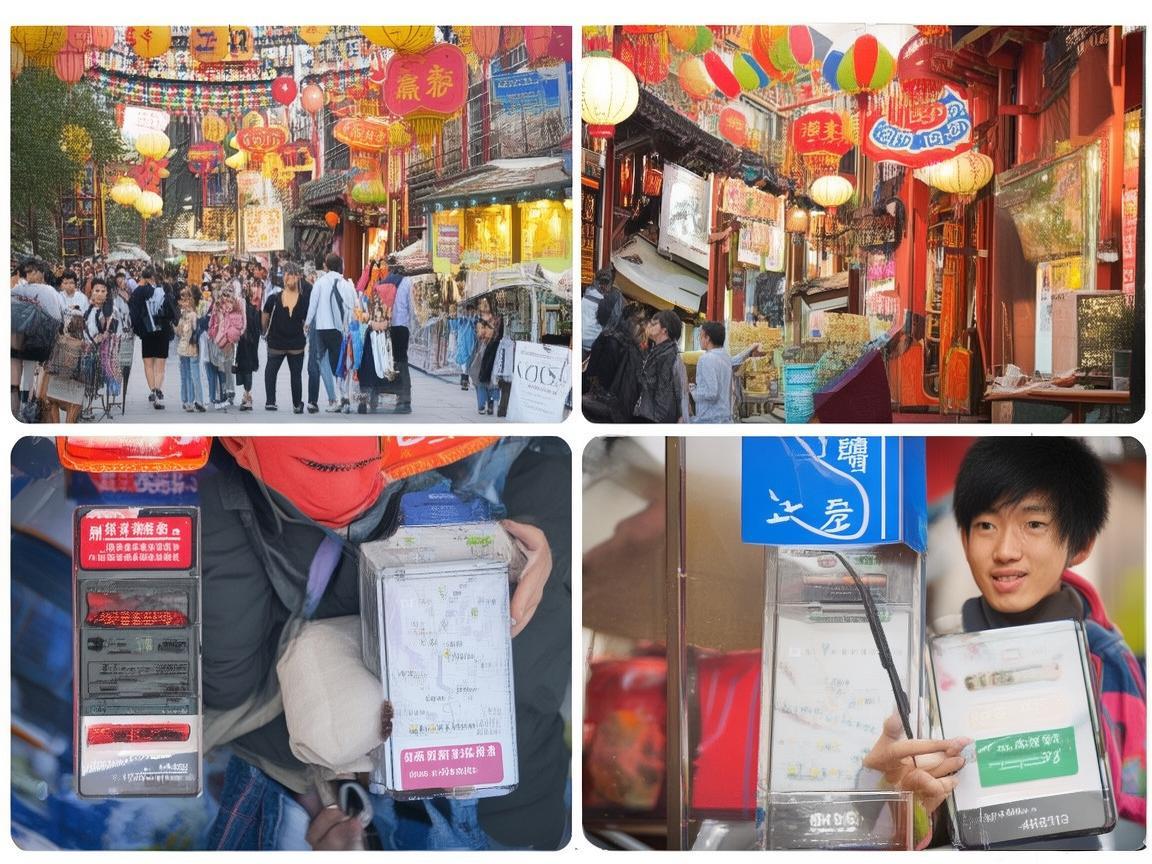
Surviving Xi’an Without a Local SIM: A Tourist’s Guide to Solving China Payment App Roaming Problems
If you’re roaming with your foreign SIM, your phone number might not be recognized by these apps. Even if you have international data, WeChat Pay and Alipay often block foreign numbers for security reasons. I learned this the hard way when I tried to pay for a taxi: Alipay kept popping up an error, “Invalid number. Please bind a Chinese mobile number.” The driver, annoyed, eventually waved me away—luckily, I had a little cash left, but it was a close call.
Solution 1: Bite the Bullet—Get a Chinese SIM Card (Easiest Fix)
The most straightforward solution is to buy a local SIM card as soon as you arrive. China’s three major carriers—China Mobile, China Unicom, and China Telecom—all offer tourist-friendly plans. Here’s what I did:
- Where to buy: I got mine at Xi’an Xianyang International Airport (Terminal 3) right after immigration. There’s a “China Mobile” counter clearly marked with “Tourist SIM” signs. You can also buy them at convenience stores like 7-Eleven or carrier stores in the city (e.g., near the Bell Tower or Muslim Quarter).
- What you need: Your passport. That’s it. No registration forms or Chinese address—tourist SIMs skip the red tape.
- Recommended plan: I chose China Mobile’s “Global Tourist SIM,” which cost 99 RMB (≈$14) and included:
- 10GB of high-speed data (valid for 7 days),
- 100 minutes of domestic calls,
- Unlimited WeChat/Alipay use (since it’s a local number).
- You can top up data later if you stay longer—just use the carrier’s app (e.g., “China Mobile”) or ask a hotel concierge to help.
Pro tip: If your phone is dual-SIM, keep your foreign SIM for emergency calls (e.g., contacting family back home) and use the Chinese SIM for daily payments and data.
Solution 2: Use International Roaming (If You’re Okay with Fees)
If buying a local SIM feels like too much hassle, international roaming is an option—but only if your carrier supports it and you’re okay with extra charges. Here’s what to know:
- Check with your carrier: Before leaving home, call your phone company (e.g., AT&T, Vodafone, T-Mobile) and ask about “China roaming” packages. For example, AT&T offers “Travel Pass”: $10/day for unlimited data and calls in China.
- The catch: Roaming data can be slow, and some apps (like WeChat Pay) still glitch. I tested my friend’s T-Mobile roaming in Xi’an—she could browse Google Maps, but Alipay refused to work because the “foreign number” flag was still there.
- Payment workaround: If you can get roaming data to load WeChat/Alipay, you might be able to add a foreign credit card (Visa/Mastercard) to your account. But I tried this—only 1 in 5 vendors accepted foreign cards, and those that did charged extra fees (e.g., 3% surcharge).
Bottom line: Roaming is fine for basic browsing, but don’t rely on it for payments. Stick to cash if you go this route.
Solution 3: Cash Is King (But Not Always Easy)
If you’re determined to avoid local SIMs or roaming, cash is your backup. But China isn’t as “cash-friendly” as you might think—especially in tourist areas.
- Where to get cash:
- Airports: Xi’an Xianyang Airport has ATMs in the arrival hall (look for “UnionPay” signs—most Chinese ATMs use this system).
- Banks: Major banks like Bank of China, ICBC, and China Construction Bank have ATMs in the city (e.g., near the Muslim Quarter or South Gate). Important: Bring your PIN—some Chinese ATMs don’t accept chip-and-PIN cards from abroad, but most work with 4-digit PINs.
- Hotels: Many 3+ star hotels offer currency exchange, but rates are worse than banks/ATMs.
- How much to carry: Vendors in tourist spots (like the Muslim Quarter) might accept 20-50 RMB notes, but smaller shops or street food stalls prefer 10 RMB or smaller. I’d recommend carrying at least 500 RMB (≈$70) in small bills to avoid awkward moments.
- The “no change” problem: Once, I bought a 15 RMB snack and paid with a 50 RMB bill—the vendor just stared at me. She didn’t have change. Lesson learned: Carry exact amounts for small purchases.
Solution 4: Borrow a Friend’s Account (Temporary Lifesaver)
If you’re traveling with a Chinese friend or meet a local who’s willing to help, this is a game-changer. WeChat Pay and Alipay allow “transfers” between users, even if they’re foreign—no local number needed for basic sending/receiving.
Here’s how it worked for me: I met a traveler named Li Na at our hostel—she’d been in China for a month and had a fully set-up WeChat Pay. When I couldn’t pay for a bus ticket, she transferred me 20 RMB via WeChat (I just needed to scan her QR code). Later, I gave her cash to cover it.
Pro tip: Save your Chinese friends’ QR codes in your phone—text them “WeChat Pay” or “Alipay,” and they’ll send you their code. This works for restaurants, taxis, and even entrance fees (some tourist sites let you pay via transfer if you show the ticket seller the confirmation).
Solution 5: Prepare Offline (Because Data Isn’t Everything)
Even with a local SIM, you’ll run into dead zones—like the Terracotta Army site, which has patchy Wi-Fi. Here’s how to prepare:
- Download offline maps: Use Google Maps (if you can access it via VPN) or Baidu Maps (Chinese alternative, available on app stores). Download the “Xi’an” offline map before you arrive.
- Save translation apps: Install iFly Translate or Youdao Dictionary—they work offline and can translate Chinese menus, signs, or vendor chatter. I used it to ask a street vendor, “How much for this?” (这个多少钱?) and she pointed to the price—no awkward gestures needed.
- Screenshot key info: Save your hotel address, emergency contacts, and transit schedules (e.g., “Xi’an Metro Line 2 from North Station to Bell Tower”) as screenshots. You never know when you’ll lose data.
My “Aha!” Moment: The Muslim Street Rescue
The turning point in my trip was at the Muslim Quarter. I’d spent all my cash on a souvenir and was starving, but every food stall wanted WeChat Pay. I was about to give up when I noticed a stall selling roujiamo (Chinese hamburgers) with a sign: “WeChat Pay/Alipay/Cash.” I showed the vendor my Alipay error message, and she smiled—she pulled out her own phone, scanned my QR code, and paid for me! Then she pointed to a cash box and said, “Give me 10 RMB later.” I was so embarrassed, but she just laughed.
That’s when I realized: Chinese people are used to tourists struggling with payments. Most will help if you ask politely. From then on, I carried a small notebook with “I need to pay—can I scan your WeChat/Alipay?” written in Chinese (我需要支付,可以扫你的微信/支付宝吗?). It saved me more than once.
Final Tips for a Stress-Free Trip
- Set up WeChat/Alipay at home: Download the apps before you leave. Even if you can’t use them fully, you can add your foreign credit card (some vendors accept this, but it’s hit-or-miss).
- Tell your bank you’re traveling: Avoid having your card blocked for “fraudulent activity.”
- Carry a power bank: Payment apps drain battery fast—nothing worse than your phone dying at the checkout.
- Be patient: Vendors might not speak English, but a smile and a “thank you” (谢谢, xièxiè) go a long way.
Xi’an is an incredible city—ancient history, mouthwatering food, and the friendliest people I’ve ever met. But don’t let payment issues ruin your trip. Whether you get a local SIM, rely on cash, or borrow a friend’s account, a little prep goes a long way. Now, go enjoy that biangbiang noodles—and don’t forget to take a picture of the giant character (it’s impossible to draw, but fun to try!).
Xi’an Airport Transfer Service
Private English-speaking driver service in Xi’an operated directly by Bruce Zhang. 24/7 airport pickup and hotel transfer for foreign travelers.
Helpful for Your Trip in Xi’an
Navigating Xi’an’s Metro: A Foreigner’s Practical Payment Guide
2026-07-27Navigating Xi’an: A Tourist’s Guide to Mastering Mobile Payments in China
2026-07-27Navigating Xi’an Like a Local: My Digital Pay Survival Guide
2026-07-26Xi’an Travel Tips: Cash vs. QR Codes for Entrance Tickets——A Tourist’s Practical Guide
2026-07-25Alipay for Foreign Travelers in Xi’an: A Practical Setup Guide
2026-07-25How to Survive (and Thrive) in Xi’an: A Tourist’s Guide to Digital Transactions
2026-07-24Navigating Theme Park Payments in Xi’an: A Traveler’s Practical Guide
2026-07-24Xi’an’s Convenience Stores: Your Go-To for Easy Travel Payments
2026-07-23My Cash Backup Strategy for Traveling in China: A Tourist’s Practical Guide
2026-07-22Emergency Payments in Xi’an: A Foreign Traveler’s Practical Guide
2026-07-22