

Traveling Xi’an: A Tourist’s Guide to Staying Connected with China’s SIM System
Landing in Xi’an, I was buzzing with excitement—the Terracotta Army, the Muslim Quarter, the ancient city walls… but within an hour of arriving, my excitement hit a wall: literally. My phone had no signal, and my international data plan was slower than a snail carrying a brick. I couldn’t navigate to my hotel, couldn’t order food on Meituan, and couldn’t even message my travel buddy to say I’d landed. That’s when I realized: in China, a local SIM card isn’t just a “nice-to-have”—it’s your lifeline. Over two weeks of wandering Xi’an’s streets, eating its street food, and getting (temporarily) lost in its hutongs, I learned the ins and outs of China’s communication system. Here’s what every tourist needs to know to stay connected (and sane) in this amazing city.
Why a Local SIM Card? China’s “Cashless, Cardless” Reality
First, let’s talk about why your home country’s SIM won’t cut it. I’d bought an “international travel plan” before leaving, which promised “coverage in China.” What it didn’t mention? The coverage was basically non-existent outside major hotels, and the data speed was capped at 2G—good enough for a text, but useless for maps, apps, or even loading a simple webpage.
Traveling Xi’an: A Tourist’s Guide to Staying Connected with China’s SIM System
In China, everything runs on mobile apps. Need to pay for a bus ride? Alipay. Want to order jianbing (savory crepes) from a street vendor? WeChat Pay. Need to book a taxi? Didi. Even checking into a hotel or scanning a QR code to enter a tourist spot requires a Chinese phone number. Without a local SIM, you’re stuck in the 1990s: carrying cash (which many small places don’t accept), asking strangers for help, and missing out on the convenience that makes travel here so smooth.
Trust me, I learned the hard way. My first night, I tried to pay for dinner with cash, only to realize the small Muslim Quarter stall only accepted WeChat. I had to beg a nearby tourist to help me pay (and then Venmo them back)—awkward and embarrassing. A local SIM would’ve saved me that hassle.
Choosing a SIM Card: China’s Big Three Operators
China has three major telecom operators: China Mobile (中国移动), China Unicom (中国联通), and China Telecom (中国电信). For tourists, China Mobile is usually the best bet—it has the widest coverage, especially in rural areas and tourist sites outside major cities. Xi’an, as a capital, is well-covered by all three, but if you plan to day-trip to places like the Terracotta Army or Mount Hua (a few hours outside the city), China Mobile’s signal will stay stronger.
Tourist-Friendly SIM Options
All three operators offer “tourist SIM cards” designed for short stays. Here’s what to look for:
- Data-Heavy Packages: Most tourists need data more than calls. China Mobile’s “Tourist Card” (游客卡) is popular: it comes with 15–30 days of unlimited data (with a “fair use” cap of 10–20GB at 4G speed, then throttled to 128kbps—still enough for maps and messaging), plus some free domestic calls. Prices range from ¥100–200 ($15–30), depending on the duration.
- eSIM vs. Physical SIM: If your phone supports eSIM (most iPhones after the XR, newer Samsung and Google Pixels), you can activate a plan online before you leave via apps like “China Unicom eSIM” or “China Telecom eSIM.” This is great for avoiding the hassle of swapping physical SIMs. I used an eSIM on my iPhone 14, and it activated in 5 minutes—no trip to a store needed!
- Pre-Pay vs. Post-Pay: Tourist SIMs are almost always pre-pay (you pay upfront, no monthly bills). You’ll top up with Alipay or WeChat Pay when you run low, but most tourist plans include enough data for a full trip.
Where to Buy a SIM Card: Airport, Store, or Delivery?
You’ve got three options for buying a SIM card, each with pros and cons:
At Xi’an Xianyang International Airport (XIY)
This is the easiest option, especially if you arrive tired and don’t want to hunt for a store. All three operators have counters in the arrivals hall (before immigration, so you can buy one even if you haven’t got your Chinese visa yet—though you’ll need your passport to register).
My experience: I landed at 10 PM, jet-lagged, and headed straight to the China Mobile counter. The staff spoke basic English, helped me pick the “15-Day Unlimited Tourist Plan” (¥120, 20GB 4G data + 100 minutes calls), and had me fill out a simple form with my passport details. Registration took 10 minutes, and I was connected before I even got to the taxi stand.
Pros: Convenient, open 24/7, staff can help with English.
Cons: Slightly more expensive than buying in the city.
In the City: Operator Stores or Convenience Stores
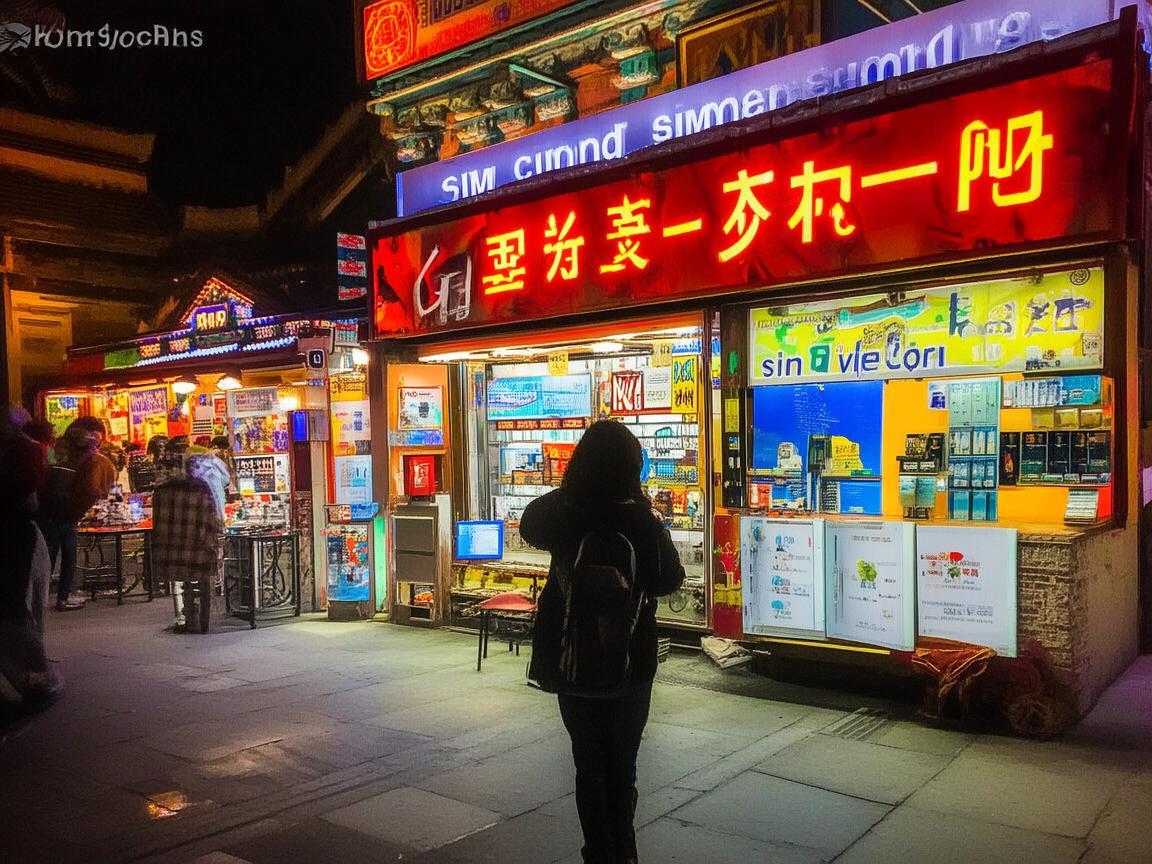
If you prefer to explore the city first, you can buy a SIM at any official operator store or even convenience stores like 7-Eleven or FamilyMart (they sell pre-activated tourist SIMs).
My experience: A few days into my trip, I wanted to top up my data (I’d used 15GB in 3 days—oops). I walked into a China Mobile store near the Bell Tower (钟楼). The staff didn’t speak much English, but I showed them my SIM, pointed to the “top up” section on a poster, and they helped me add a ¥50 “data add-on” (10GB extra). They also taught me how to check my data balance via a USSD code (*#100#), which came in handy later.
Pros: Cheaper than the airport, more locations, staff can help with local issues.
Cons: May need basic Chinese (or a translation app), store hours vary (most close by 8 PM).
Online Delivery (Meituan/Alipay)
If you’re staying somewhere with a stable Wi-Fi (like an Airbnb), you can order a SIM card via Meituan or Alipay and have it delivered to your hotel in 1–2 hours. This is great if you arrive late and don’t want to leave your hotel.
My experience: On my last day, I needed a SIM for my friend who was joining me later. I used Meituan, searched “西安旅游SIM卡,” and picked a China Unicom plan with 7 days of unlimited data (¥80). Ordered at 10 AM, delivered to my hotel by 11:30 AM. The delivery guy even helped me activate it!
Pros: Super convenient, fast delivery, often cheaper.
Cons: Need a Chinese address (your hotel works), requires Alipay/WeChat Pay.
Crucial Step: Registering Your SIM (It’s the Law!)
Here’s the most important thing: all SIM cards in China must be registered to your real name. You can’t just buy a SIM and use it—you need to link it to your passport. This is a government anti-fraud rule, and they’re strict about it.
If you buy a SIM at the airport or a store, the staff will register it for you (you’ll need to show your passport). But if you buy a pre-activated SIM from a convenience store or online, you’ll need to register it yourself. Here’s how:
- Download the “SIM Registration” App: Search for “SIM卡实名认证” in your app store (or use the operator’s app, like “China Mobile” or “China Unicom”).
- Enter Your Details: You’ll need your passport number, full name (as on your passport), and the SIM card’s ICCID (the 20-digit number on the SIM card tray).
- Upload a Photo: You’ll need to take a photo of your passport’s data page and a selfie.
- Wait for Approval: It usually takes 10–30 minutes. You’ll get a notification once it’s done.
Warning: If you don’t register your SIM, it will be blocked within 24–48 hours. I met a traveler who bought a “pre-activated” SIM from a street vendor and didn’t register it—she lost signal on her second day and had to buy a new one. Don’t make that mistake!
Using Your SIM: Tips for Xi’an Travel
Once you’re registered and connected, here’s how to make the most of your SIM card in Xi’an:
Navigation: Baidu Maps Over Google Maps
Google Maps doesn’t work well in China (it’s blocked), so you’ll need a local app. Baidu Maps (百度地图) is the most reliable for Xi’an. It has real-time traffic updates, bus/subway routes, and even indoor maps for places like the Big Wild Goose Pagoda. I used it every day to get from my hotel in the Muslim Quarter to the Terracotta Army, and it never steered me wrong.
Pro tip: Download offline maps for Xi’an before you leave home (via Baidu Maps or a VPN)—in case you lose signal in remote areas.
Payment: WeChat Pay and Alipay
Almost every shop, restaurant, and even street vendor in Xi’an uses WeChat Pay (微信支付) or Alipay (支付宝). To set them up:
- WeChat Pay: Open WeChat, go to “Me” → “Services” → “Wallet” → “Payment Methods” → “Add Bank Card.” You’ll need to link your Chinese bank account (or a foreign credit card, though some don’t work). Alternatively, ask a friend to send you “red envelopes” (cash transfers) via WeChat, which you can use to pay.
- Alipay: Similar to WeChat Pay—open the app, go to “My” → “Payment Methods,” and link your card.
My favorite moment: Buying a roujiamo (Chinese hamburger) from a street vendor in the Muslim Quarter. I showed him my WeChat Pay QR code, he scanned it, and I paid ¥5. No cash, no hassle.
Transportation: Didi and Subways
Xi’an’s subway system is clean, efficient, and cheap (¥2–8 per ride). You can buy a transit card at any subway station or use a QR code via Alipay/WeChat (search for “西安地铁” in the apps).
For taxis or ride-hailing, Didi (the Chinese Uber) is your best friend. It’s cheaper than taxis and more reliable. You need a Chinese phone number to register, but most tourist SIMs come with free calls, so you can sign up easily. I used Didi to get from the Terracotta Army back to the city center at 10 PM—no haggling, no overcharging.
Food Delivery: Meituan and Ele.me
Xi’an’s street food is amazing, but sometimes you just want to eat in your hotel room. Meituan (美团) and Ele.me (饿了么) are like Uber Eats for China. You can order everything from dumplings to hot pot, and it’s delivered in 30–40 minutes. I ordered late-night snacks multiple times—my favorite was a spicy noodle soup from a local restaurant that only delivered via Meituan.
Troubleshooting: Common SIM Issues and Fixes
Even with the best plan, things can go wrong. Here are the most common problems I faced (and how I fixed them):
“No Signal” in Remote Areas
I took a day trip to Mount Hua (华山), a mountainous area about 2 hours from Xi’an. My phone signal kept dropping. The fix? Manually switch networks. Go to your phone’s “Settings” → “Mobile Networks” → “Network Operators” and select “China Mobile” (or your operator) manually. This helped me stay connected at the top of the mountain.
Data Running Out
I’m a heavy data user (maps, photos, videos), so I used up my 20GB plan in 10 days. The fix? Buy a data add-on. Most operators offer “data packs” for ¥20–50 (3–10GB extra). You can buy them via the operator’s app (search for “流量包”) or at a convenience store.
SIM Card Not Working After Registration
If your SIM is blocked after registration (a “network error” message), it’s usually because you entered your passport details wrong. Go back to the “SIM Registration” app and double-check your name, passport number, and ICCID. If that doesn’t work, call your operator’s customer service (China Mobile: 10086; China Unicom: 10010; China Telecom: 10000—they have English-speaking staff).
Final Thoughts: A SIM Card Makes Xi’an Travel 10x Better
By the end of my trip, my local SIM card felt like a part of me. It helped me navigate the city’s winding hutongs, order the best street food, and even find a lost umbrella (via a “Lost & Found” group on WeChat). Without it, I would’ve missed out on so much of what makes Xi’an special—the spontaneity, the convenience, the ability to just explore without worrying about being disconnected.
So, before you pack for Xi’an, add a local SIM card to your list. It’s cheap, easy to get, and will make your trip smoother than you can imagine. Trust me—you’ll thank me when you’re eating a jianbing while navigating to the Terracotta Army, all without missing a beat.
Happy travels—and stay connected!
Xi’an Airport Transfer Service
Private English-speaking driver service in Xi’an operated directly by Bruce Zhang. 24/7 airport pickup and hotel transfer for foreign travelers.
Helpful for Your Trip in Xi’an
China SIM vs. Pocket WiFi: A Traveler’s Guide for Xi’an
2026-07-29Xi’an Travel Tips: Activating Your SIM Card at China’s SIM Activation Centers
2026-07-29Unlocking Xi’an: How a China SIM Card Made My Trip Efficient and Hassle-Free
2026-07-29Xi’an Travel Tips: A Tourist’s Guide to China SIM Cards (and Why They’re a Lifesaver)
2026-07-29Traveling Xi’an Like a Local: Why a China SIM Card Is Your Ultimate Travel Lifeline
2026-07-29Your Ultimate Guide to China SIM Connectivity for a Seamless Xi’an Trip
2026-07-28Your Ultimate China SIM App Guide: Navigating Xi’an Like a Local
2026-07-27China SIM: My Lifeline for Seamless Travel in Xi’an
2026-07-27Xi’an Travel Guide: Staying Connected with China SIM for a Hassle-Free Trip
2026-07-27Navigating Xi’an: A Traveler’s SIM Card Troubleshooting Guide
2026-07-27